

Decoding the Battlefield: NPS Students Develop Solution to Support Urgent U.S. and NATO Need
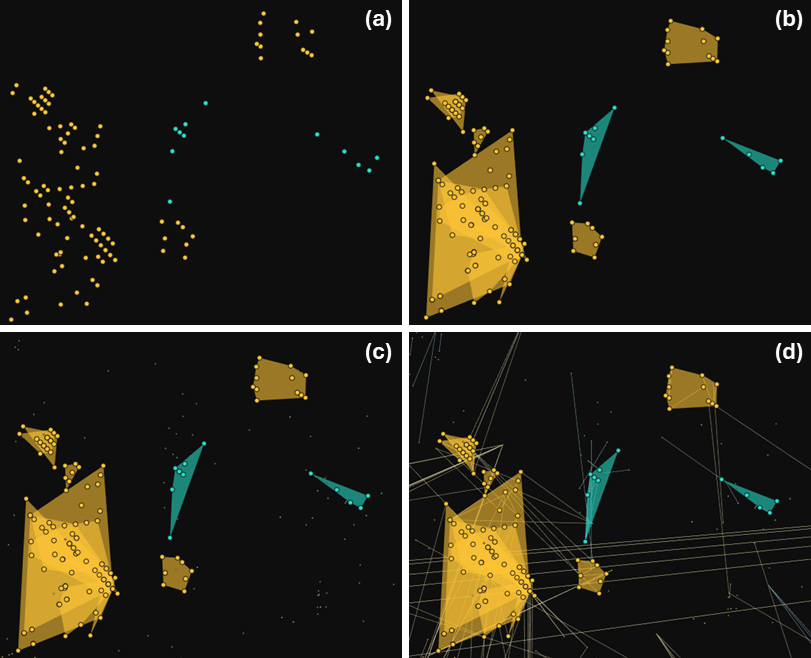
A team of four Naval Postgraduate School students developed Frequency-based Algorithm for Spatial and Temporal Clustering Analysis with Thresholds (FASTCAT) to extract patterns in adversary battlefield emissions data from Ukraine.
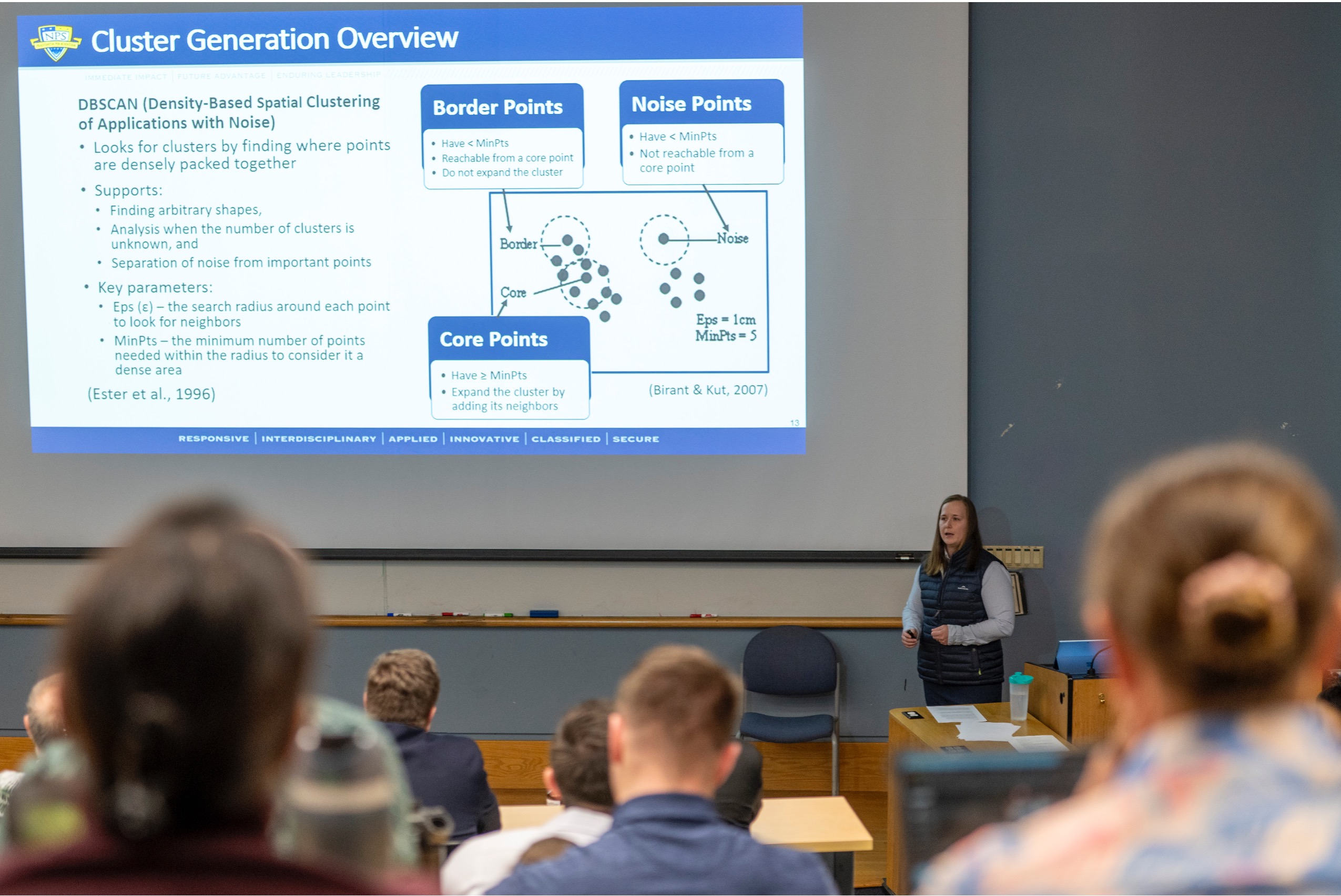
The Naval Postgraduate School FASTCAT team briefed U.S. and NATO at the Joint Analysis, Training, and Education Centre (JATEC) in Bydgoszcz, Poland. FASTCAT was completed in only two months, and exceeded expectations.
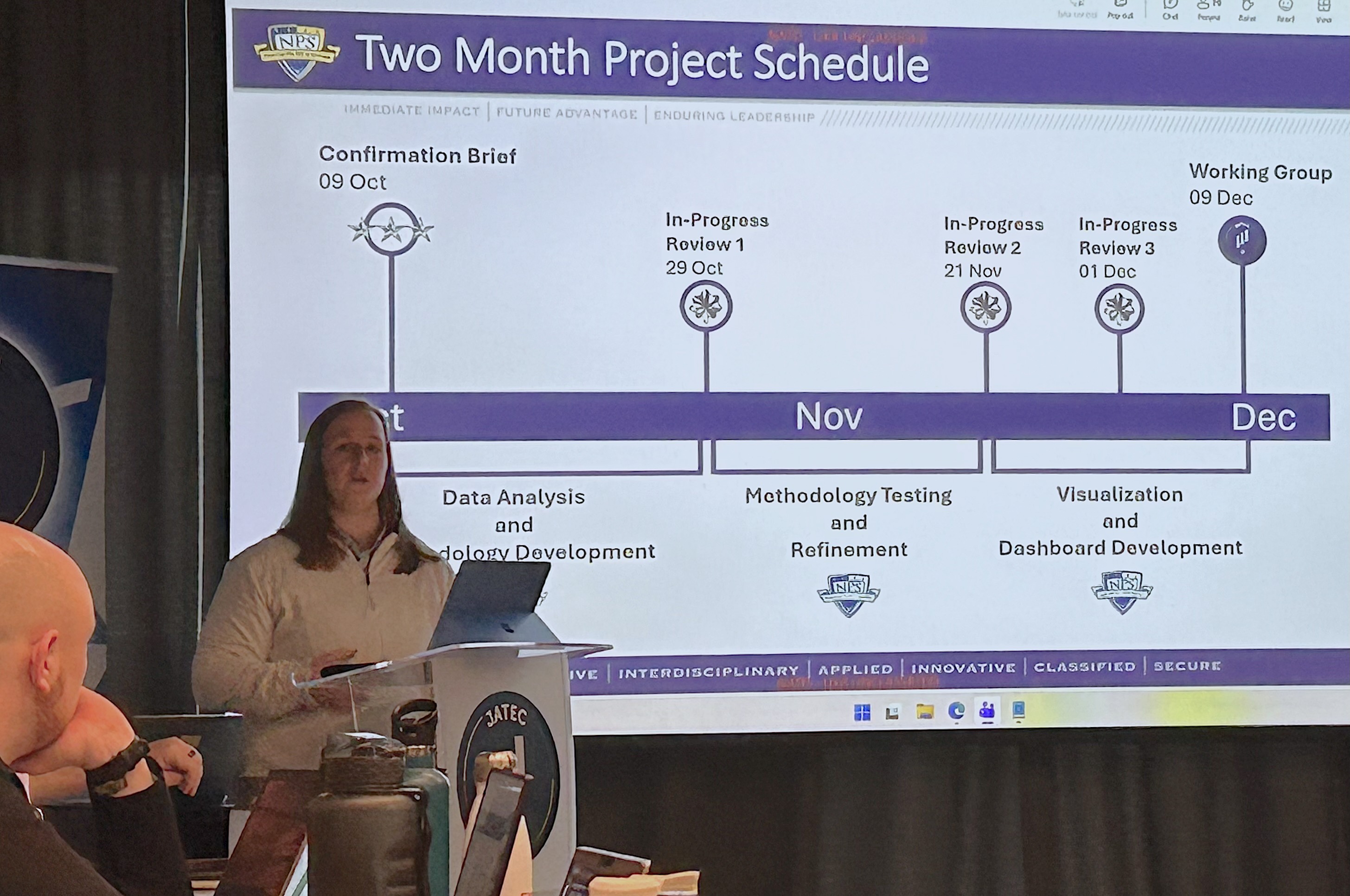
Midcareer officer scholars from Naval Postgraduate School used an unsupervised machine learning model for cluster analysis of synthetic battlefield emissions data from Ukraine decoding and tracking sources.
Naval Postgraduate School students rapidly develop a machine learning tool for operators and analysts to help find and track adversary emissions.
MONTEREY, CA, UNITED STATES, April 29, 2026 /EINPresswire.com/ -- Adversarial soldiers, vehicles, drones, and other assets communicating wirelessly — whether stationary or on the move in the battlefield — emit electromagnetic (EM) signals that can be detected and recorded. Because deciphering signals that are mixed together can be extremely difficult, oftentimes information about their sources is unknown.
However, there are decisive advantages in understanding the nature of signals such as these. This was why the Operations Analysis Branch within NATO’s Supreme Allied Commander Transformation sought a new way to better uncover the origin behind the unknown signals. This would enable intelligence, surveillance, and reconnaissance (ISR) to more effectively interrogate the signals.
To solve this operationally significant, data-driven problem, NATO turned to a small team of mid-career officer scholars who were studying operational data science and statistical machine learning with the Data Science Analytics Group (DSAG) at the Naval Postgraduate School (NPS).
Coding-Competent Military Operators:
NATO provided synthetic battlefield emission data from Ukraine to the NPS team and set the following three requirements for the solution.
1. Customizable parameters to support analyst within the targeting cycle.
2. Scalable to incorporate data as it is collected.
3. Rapid, repeatable processing with visual outputs to augment existing intelligence.
The NPS team had the knowledge, skills, and operational experience to determine a method to extract meaning from the seemingly jumbled and patternless collection of emissions data they received. Called the Frequency-based Algorithm for Spatial and Temporal Clustering Analysis with Thresholds (FASTCAT), the proof-of-concept analytic interface developed by the NPS team as the solution for NATO proved successful at revealing clues about the possible presence and whereabouts of enemy activity.
FASTCAT searches for spatial, temporal, and frequency relationships between the individual data points. Using open-source resources to augment information for each data point, the geographic nature of the land is determined to help further analysis. FASTCAT visualizes its findings by presenting them on a mapping application with a dashboard that allows users to add and remove layers of analysis and adjust parameters to assist in target area refinement.
The brains behind FASTCAT on the NPS side came from a multinational and interservice collaboration between U.S. Navy Lt. Elliot Kim and Lt. j.g. Taylor Haist, U.S. Army Maj. Cody Ward, and Royal Australian Air Force (RAAF) Squadron Leader Darby Nelson. They were among the students who took the quarter-long course, “Case Studies in Applied Defense Analytics,” which required them to complete a capstone project separate from their thesis research.
For these four students’ capstone project, they chose what would eventually become FASTCAT. U.S. Army Lt. Col. Rob Froberg, a DSAG and NPS Department of Operations Research (OR) faculty member, was a co-instructor of the course and one of the mentors to the FASTCAT team. Interactions with staff from a previous deployment helped Froberg open the door to this partnership between NPS and NATO.
“NPS produces students with industry-standard skills in data science,” said NPS’ David Alderson, DSAG executive director and OR department chair. “They are capable of developing products that compete with the best of what industry offers. Our students are very qualified and can satisfy the immediate need for insourcing talent to solve mission critical challenges across the defense spectrum.”
The students’ work was so good, they would later be invited to personally brief the NATO Joint Analysis, Training, and Education Centre (JATEC) in Bydgoszcz, Poland. NATO JATEC is a relatively new but important initiative focused on capturing, analyzing, and operationalizing battlefield lessons from Ukraine.
Alderson said the students’ results also found their way to U.S. Navy Vice Adm. Jeffrey W. Hughes, Deputy Chief of Staff, Capability Development, Headquarters, NATO Supreme Allied Command Transformation, who was instrumental in arranging the students demonstration and briefings.
“The Naval Postgraduate School’s ability to move quickly on a complex, real-world challenge reflects exactly the kind of delivery-driven mindset we need,” said Hughes. “Ukraine is producing an unprecedented body of contemporary combat data and hard-won battlefield insight. Harnessing that evidence, through the unique, defense-focused academic environment at Naval Postgraduate School, allows us to turn lessons identified into lessons applied, accelerating the delivery of credible, interoperable capabilities for both U.S. and allied warfighters.”
When demonstrated to NATO JATEC, the FASTCAT tool performed beyond expectations, with the team also completing the entire project in just two months at essentially no cost to NATO since the work was part of the students’ studies.
In fact, FASTCAT reportedly outperformed a second effort running in parallel that NATO contracted to solve the same problem, even though this other effort had substantially more funding and time for development.
“The combination of expertise from NPS faculty and students yields this rapid development capability,” stressed Alderson. “Not only did the NATO briefing about FASTCAT go particularly well, but it also resulted in ongoing work sponsored by NATO that DSAG will support.”
NPS teammate Kim, who’s earning his master’s in operations research with a focus on human resources, explored whether FASTCAT had potential for predictive capabilities. Aligned with Alderson’s assessment, Kim believes in the great value students can contribute even before they graduate and return to the fleet.
“There's a lot of analytical work that needs to get done within the DOD enterprise right now that people don't have the bandwidth for or the time or the expertise,” said Kim. “Utilizing NPS, particularly the master’s students, is a great way to help fill the gaps. As midcareer officers, we have a breadth of experience and expertise that’s tangible and operational even before coming to NPS, which is then refined and elevated by our graduate studies.”
Development of FASTCAT:
NATO provided the NPS team with 34,000 synthetic electromagnetic emission data points that were representative of those detected on a battlefield over a period of three months. Each data point contained only four characteristic variables: the emission’s frequency, timestamp for when it was detected, and possible latitude and longitude of where the detection occurred.
This sparse dataset had no other information attached to it. There was no signal strength or duration, and there were no details about how the emissions were collected, what the emission sources were, or how the sources moved.
Froberg, who also served as the NPS team’s military advisor, provided insight into how operational experience reveals what might hide in a dataset like this. Using the example of an air defense system tracking a target, he described how signals might be generated on a battlefield.
“A sensor signals a fire coordinator that signals a shooter,” Froberg said. “And then the shooter sends back a note saying, ‘Hey, I shot the target.’ And the sensor will check to see if it did and if the target is still operational. They’re all talking to each other, so they have a temporal relationship. And they’re talking on the same frequency.”
Each unit of the air defense system might be spread across the battlefield, but their individual emissions can still be detected. However, they are mixed in with all the other emissions detected. FASTCAT was developed to sift through all the data and extract the locations of possible emitters and the connections between them.
Insight such as this comes naturally to NPS officer scholars, who already think like operators and have mastered the “operator language” spoken by the sponsors.
“We had a lot of data points, but not a lot of information about each individual point. So, we needed to figure out what methodology to use on the data that would provide valuable outcomes for the sponsor,” said NPS student Nelson. The RAAF officer continued to use the knowledge and understanding she learned from her completed Operational Data Science and Statistical Machine Learning certificate in addition to her master’s in manpower systems analysis.
“Given that we didn't have that information about the collection methodology or collection validation, the project lent itself very well to unsupervised machine learning, which is great at finding patterns within datasets like ours,” Nelson continued. “In particular, we focused on clustering analysis. If we're capturing the same emissions, or very similar emissions, in the same area and around the same period of time, then we could plausibly say that there might be an asset here.”
FASTCAT was coded in Python and also made use of open-source applications for the unsupervised machine learning model and functions, such as mapping and visualization.
For the clustering analysis, FASTCAT searches emissions within spatial areas. The user defines what qualifies as a cluster based on the distance between data points, the number of them that are close enough together, the time they occur, and their emission frequency. The interface allows the user to adjust these four parameters to better help find cluster relationships within the dataset.
Using operational experience, NPS students understand the intricacies of what they’re looking for. It’s the context that lives outside the raw data that makes the analysis compelling. They know how to engineer the features of the interface to support analysis that extracts concealed information lurking from within the clustered data.
FASTCAT applies network analysis to the clusters and unclustered data points. This links clusters and unclustered data points together that share connections. Going back to the air defense example, the sensor, fire coordinator, and shooter would be three separate clusters that are spaced far apart, but, since they are communicating on the same frequency around the same time, they may belong to the same network.
To gain more insight, the data points are classified by the geographic features present at their locations, such as forest, urban, or water.
The clusters, networks, and geographic features are all layers that FASTCAT maps and visualizes. These layers can be added and removed, and their parameters adjusted. This functionality allows FASTCAT to be a fast and accessible interface for battlefield operators and analysts.
With its clever data-crunching algorithm and efficient data representation, the interface runs quickly on a laptop without a live connection to a remote computing cloud or need of high-performance computing.
Though an older, limited synthetic emissions dataset was provided by NATO for the development of FASTCAT, when used operationally, it’s designed for rapid ingestion of current data that contains more information than just time, location, and emission frequency.
Greater Strength Through Partnership and Collaboration:
In December 2025, the NPS team briefed FASTCAT to French Navy Adm. Pierre Vandier, NATO Supreme Allied Commander for Transformation, in Norfolk, and then to the NATO Joint Analysis, Training, and Education Centre (JATEC) in Bydgoszcz, Poland. U.S. Army Lt. Col. Devin Eselius represented NATO for the FASTCAT project. A senior operations research analyst, he was who Froberg had initially contacted about the partnership.
“The bottom line is that the NPS team represented themselves and the organization with distinction,” Eselius said. “The team’s professional delivery of information tailored to each audience impressed not only the strategic commander for NATO transformation, but the original data owners as well. The interface readily integrated into a Ukrainian battlefield system.”
Eselius says he looks forward to future collaborations, adding, “This insourcing project serves as an excellent example of the outsized impact a small group of coding-competent military operators can have when they can access data, development tools, and operational problems.”
----------------------
Naval Postgraduate School (NPS) is located in Monterey, California, provides defense-focused graduate education, including classified studies and interdisciplinary research, to advance the operational effectiveness, technological leadership, and warfighting advantage of the naval service. Established in 1909, NPS offers master’s and doctorate programs to Department of War military and civilians, along with international partners, to deliver transformative solutions and innovative leaders through advanced education and research.
Public Affairs Office
Naval Postgraduate School
831-656-3567
email us here
Visit us on social media:
LinkedIn
Instagram
Facebook
YouTube
X
Legal Disclaimer:
EIN Presswire provides this news content "as is" without warranty of any kind. We do not accept any responsibility or liability for the accuracy, content, images, videos, licenses, completeness, legality, or reliability of the information contained in this article. If you have any complaints or copyright issues related to this article, kindly contact the author above.
